A bathroom can look worn without being hard to live with. The tougher question is what happens on an ordinary morning: Is there room to set things down? Does the shower suit the way you use it now? Are you working around a fixture you would not choose again?
The most useful benefits of bathroom remodeling are the ones that make those daily moments work better. Before you choose finishes, name what you want to stop working around. That gives you a better starting point for deciding how much to remodel.
A good first question: If the bathroom looked exactly the same tomorrow but worked better, what would have changed?
Start with the frustrations you meet every day
You may have nowhere convenient to keep towels, a vanity that crowds the doorway, or a tub that no longer fits how your household bathes.
Pay attention to what happens, not just what you dislike about the room’s appearance. “The bathroom feels dated” is a fair observation, but it does not yet tell you what work would help. “Two people need the sink at the same time, and the counter is always covered” points toward a question about space and storage.
A useful way to sort the complaints is to look at three parts of your routine:
-
Getting ready: Where do people wait, reach, set things down, or get in each other’s way?
-
Bathing: Is the tub or shower comfortable to use and suited to what your household needs?
-
Cleaning and upkeep: Which surfaces, fixtures, or awkward spaces take more effort than they should?
A new shower may improve bathing, but it will not create more room at the sink. A new vanity may add useful storage, but it will not fix a layout that leaves no comfortable path through the room.
Which benefits of bathroom remodeling matter most to you?
The answer depends on what is making the room difficult now. A remodel can improve several things at once, but each improvement comes from a particular choice.
Give your routine a better fit
Decision rule: Fixtures should suit the way the bathroom is used. If you rarely use the tub but regularly wish the shower worked better for you, a shower installation may be worth discussing. If the tub remains important, replacing an aging one may serve you better than removing it.
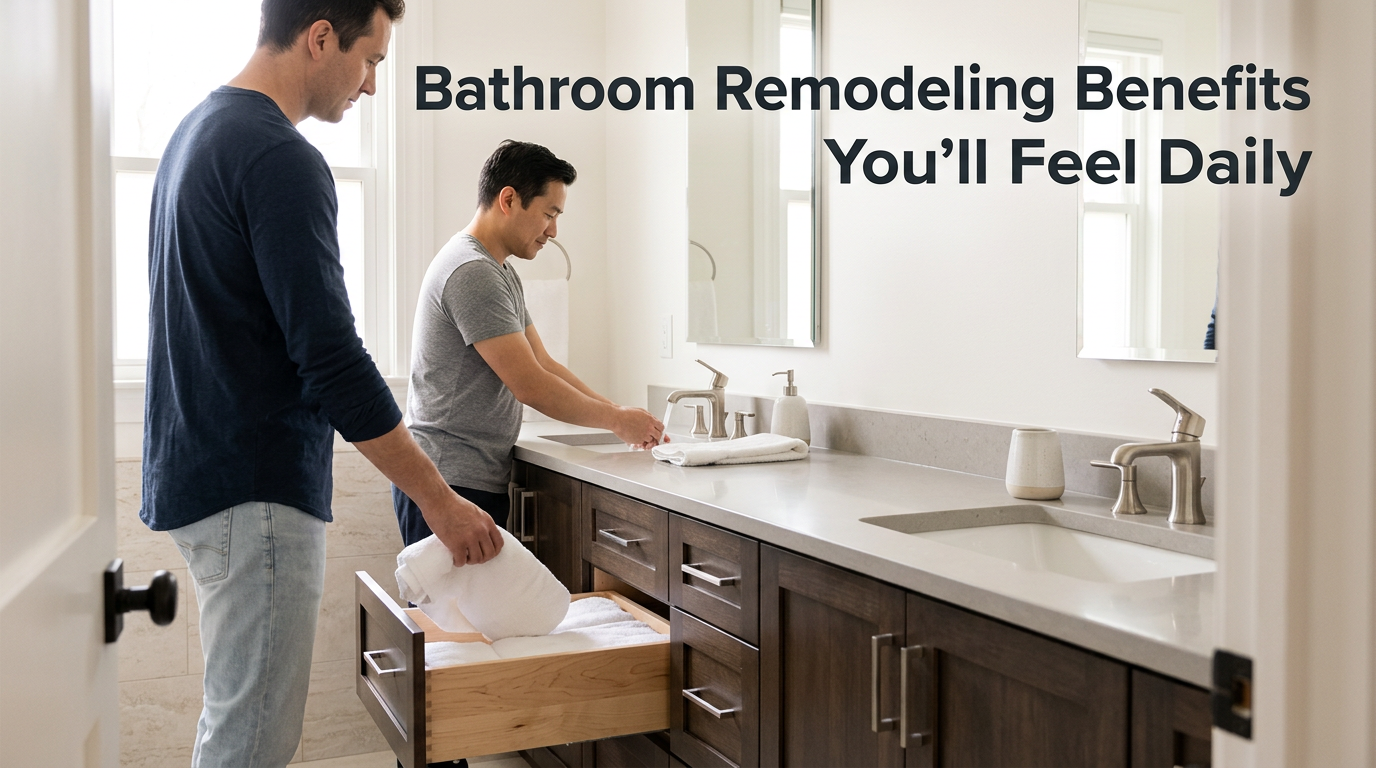
Think beyond the fixture itself. Where do you put soap, towels, and clean clothes? Is there enough usable counter space? Does opening a cabinet interrupt someone else’s path?
The benefit is not “more features.” It is less working around the room. A simple choice that supports your routine can matter more than a long list of additions you would seldom use.
Make the space more comfortable to use
-
Movement and use: Comfort includes how easily you can move through the bathroom and use what is in it. A layout that felt acceptable years ago may now feel cramped. A fixture may still work, yet no longer be the one you want to use every day.
-
Practical terms: Describe comfort in practical terms when you talk through plans: “I want more room beside the vanity,” or “I want bathing to feel less awkward.” Those statements give a remodeling conversation something concrete to work with.
-
Appearance: A change in finishes can make a room more pleasant, too. Just keep appearance alongside the ways you use the space, rather than expecting a new look to solve a functional problem by itself.
Take underlying problems seriously
In an older bathroom, the visible fixtures may not tell the whole story. Plumbing, electrical, plaster, or framing issues can be discovered during remodeling. If those issues are present, they need attention before new finishes cover them.
That does not mean you should assume there is a hidden problem behind every wall. It means the scope should allow for an honest conversation about what can be seen now and what may only become clear after work begins. Ask what would happen if something underneath needs repair and how that could affect the plan.
When you are comparing ideas, leave space in your priorities and budget discussion for the condition of the room itself.
A focused replacement and a complete remodel solve different problems
You do not have to decide between “do nothing” and “redo everything.” The right scope follows the source of the frustration.
A focused tub or shower replacement makes sense to explore when that fixture is the main problem and the rest of the bathroom still works well for you. For instance, if you like the room’s layout and storage but want a different bathing setup, start the conversation there. A focused project has a clear target; it should not be expected to solve crowding at the vanity or poor storage elsewhere.
A complete bathroom remodel is worth discussing when several parts of the room work against you. Perhaps the fixture, vanity, storage, and layout all need attention. Changing only one could leave you with the same daily frustrations in a newer-looking room.
Decision rule: Name your top two complaints. If both point to the same tub or shower, ask about a focused replacement first. If they point to different parts of the room—or to how those parts fit together—ask what a complete remodel could address.
There is a middle question, too: Which parts of the bathroom are genuinely worth keeping? You may like the layout but dislike the fixtures, or value the tub but need a better place for everyday items. Bring those answers to a design conversation instead of assuming every existing choice must go.
No scope can be settled from a wish list alone. The room’s measurements, the condition of what is there, your fixture choices, and any issues uncovered during work all matter. A clear list of goals helps you discuss those conditions without losing sight of why you started.
Turn those priorities into a useful remodeling conversation
Once you can describe what needs to change, the next challenge is matching it to work that fits the home. Perfect Choice Home Solutions offers tub replacement, shower installation, and complete bathroom remodeling. That range lets you discuss a focused change as well as a larger renovation, rather than treating every frustration as a reason to replace the whole room.
A design consultation can cover choices for fixtures, vanities, and finishes. In older homes, work may also involve addressing plumbing, electrical, plaster, or framing issues found during remodeling before new finishes go in. The useful question is how those possibilities apply to your bathroom, not whether every home needs the same work.
If you have a short list of what is not working, get a free bathroom remodeling quote to discuss a scope that addresses it.
See how one household could choose its scope
Consider a homeowner who plans to stay put and has three complaints: the tub no longer suits their bathing routine, the vanity offers too little usable space, and two people have trouble moving through the room in the morning. They also like some of the room’s existing finishes and do not want to replace things without a reason.
The first step is to separate the problems. A tub replacement could address the bathing complaint. A different vanity might help with daily storage and counter space. But neither choice, on its own, proves that two people will move through the room more comfortably. That concern calls for a closer look at the layout and measurements.
The homeowner could take two possible scopes into the discussion:
-
Focused work: Change the bathing fixture and leave the rest in place, accepting that the vanity and traffic problem will remain for now.
-
Broader work: Discuss a complete remodel that considers the bathing fixture, vanity, and layout together, while identifying which existing elements can stay.
Neither option is automatically right. If bathing is the only change the homeowner is ready to make, focused work has a clear purpose. If the morning crowding is equally important, it would be a mistake to describe a new tub or shower as the whole solution. The concrete result of this exercise is a better request: “Please help us understand what each scope would change—and what it would leave unchanged.”
The room still needs to be assessed. Fixture choices, underlying conditions, and the cost of each proposed scope need to be reviewed before the homeowner commits.
Want to compare a focused change with a larger plan? Get a free quote for the bathroom improvements you have in mind.
Rank your goals before you ask for a quote
A priority list keeps an estimate conversation grounded when choices begin to multiply. Make yours short enough that you can explain it without walking through every finish you have ever liked.
Write down:
-
Your must-fix problem: What regularly makes the bathroom harder to use?
-
Your second priority: What would make the biggest difference after that?
-
What you want to keep: Which parts of the room still serve you well?
-
Your scope question: Are you considering one fixture, or do several parts of the room need to work together differently?
-
What needs confirmation: Which choices depend on measurements, existing conditions, or the cost of the proposed work?
Then put your preferences in order. “Improve bathing first, add storage if it fits the budget, and keep the current layout unless there is a good reason to change it” gives someone much more to work with than “make it nicer.”
Be candid about cost before you fall in love with a plan. Ask for a clear explanation of what the proposed work includes and what decisions could change its scope. You can value lasting work and still need to understand the price before agreeing to a larger project.
Frequently Asked Questions About Bathroom Remodeling Benefits
Is remodeling worthwhile if my bathroom still works?
It can be, if “works” means the fixtures function but the room regularly makes life harder. Start by naming a specific improvement you would use: a bathing fixture better suited to your routine, more practical storage, or a layout that feels less crowded. If you cannot identify a meaningful change, you may not need a large project simply because the room looks older.
Will replacing my tub or shower improve the whole bathroom?
It can improve the part of your routine tied to that fixture, but it will not automatically fix other problems. If you are also short on counter space or struggling with the layout, keep those concerns separate. That way, you can judge a focused replacement by what it is meant to accomplish rather than expecting it to do the work of a complete remodel.
How do I know whether I need a complete remodel?
Look at how many parts of the bathroom contribute to your main complaints. When the bathing fixture, vanity, storage, and movement through the room all need reconsidering, a complete remodel is worth discussing. If one fixture is the clear issue and the rest serves you well, start with that focused option. An assessment of the room can help test either idea.
Should I choose finishes before deciding on the scope?
You can collect ideas, but settle your functional priorities first. A finish you like may still be part of the plan; it just cannot tell you whether the vanity should change or whether the layout works. Bring both kinds of information to a design discussion: what you like looking at and what you need the room to do.
What if problems are found after the work begins?
Ask how they would be explained and handled before you approve a plan. Older bathrooms can reveal plumbing, electrical, plaster, or framing issues during remodeling, but no one should treat an unseen condition as a confirmed repair. Understand the proposed scope, and ask how new findings could affect decisions and cost.
Will a bathroom remodel increase my home’s value?
A specific increase cannot be promised. If you plan to stay in your home, a more dependable starting point is the value you can describe in daily use: a fixture that suits you, better function, or a room that is more comfortable to live with. Let those priorities guide the project, then consider appearance and cost alongside them.
The best bathroom plan starts with the moment you are tired of working around. Now you can name that moment, decide whether it points to one fixture or the wider room, and ask what it would take to change it.
Ready to discuss what would improve your bathroom? Get a free quote.